
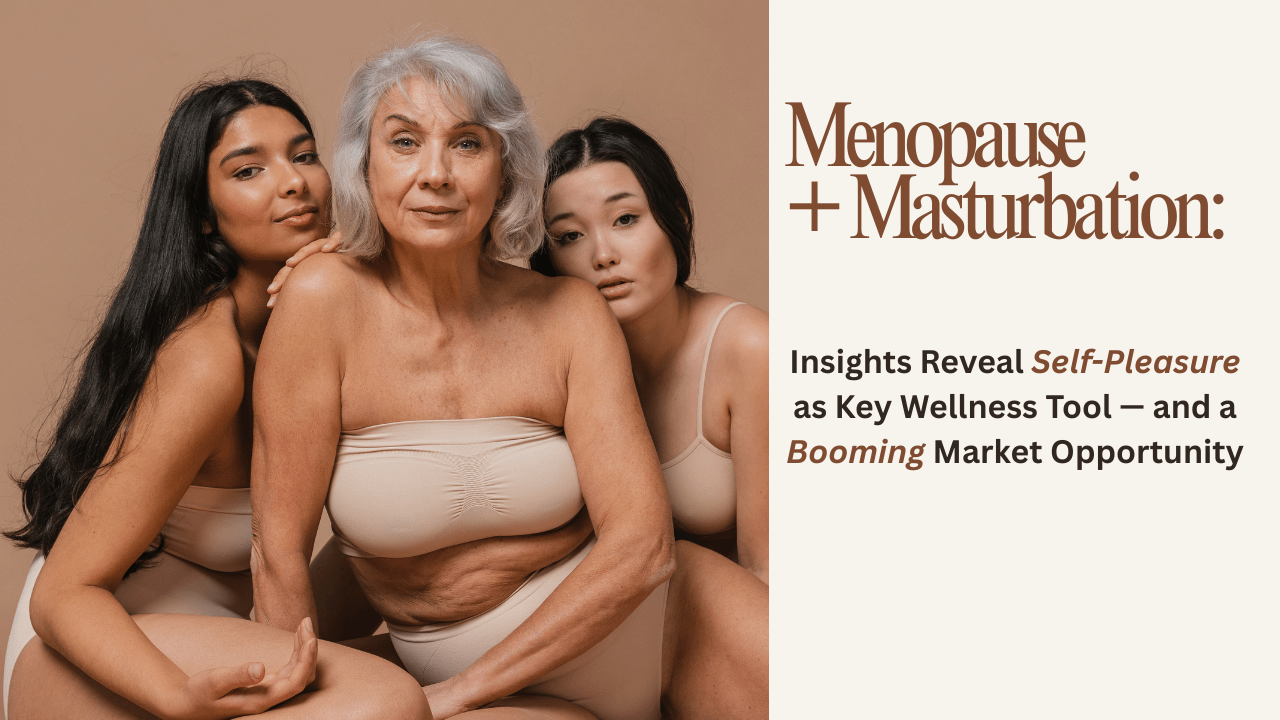
New research highlights a major untapped market for sexual wellness brands.
Key Takeaways
- Masturbation is an effective lifestyle tool for menopause symptom relief.
- Benefits are stronger with direct clitoral stimulation and orgasm.
- Findings reveal a large, underserved consumer segment within the sexual wellness industry.
Study Overview
A new study from the Kinsey Institute surveyed 1,178 U.S. women ages 40–65 and found that nearly one in five perimenopausal and postmenopausal women experienced symptom relief from self-pleasure.
Women who masturbated regularly — especially with a direct clitoral stimulation pleasure devise, like the Womanizer Next 3D Pleasure Air Stimulator that was used in this study — reported fewer mood issues, better sleep, improved lubrication, increased desire, and reduced pain or hot flashes.
Masturbation was rated as one of the most effective non-medical strategies for symptom management, ranking on par with partnered sex and lubricants, and outperforming lifestyle tools like diet, supplements, exercise, and relaxation.
What Symptoms Improved?
Among women who used masturbation as a management tool:
- 43% improved mood
- 13% improved desire/pleasure
- 13% improved sleep
- 11% improved lubrication
- 10% reduced pain or hot flashes
In the structured toy-use phase using the Womanizer Next 3D, 92.9% of participants reported experiencing at least one symptom less frequently.
Notable improvements included feeling less tired (50%), less anxious (42%), fewer mood swings (42%), less irritable (25%), fewer hot flashes (17%), and fewer headaches (17%).
Only 3% reported worsening symptoms — often linked to difficulty reaching orgasm.
By the end of the study, the number of women rating their symptoms as “very or extremely bothersome” dropped from 27% to 17%.
Why It Works
Researchers propose two key mechanisms:
- Orgasm-Related Neurochemistry
Oxytocin and endorphins may reduce pain, support mood, and improve sleep quality. - Vagal Efficiency
Toy-based clitoral stimulation may enhance vagal nerve activity — a marker linked to better mood, stress response, focus, and sleep.
Women who reached orgasm more reliably saw the strongest improvements.
Importantly, 66% of perimenopausal women said they would masturbate more often if they knew it could ease symptoms, and 57% would do so if recommended by a healthcare provider — indicating a major gap in consumer education.
“The results of this investigation provide further evidence that self-pleasure is self-care during the menopause transition. Specifically, we found that women who masturbated three to four times per week for a couple of months tended to experience improvements in their sleep, mood, and overall well-being. The improvements were largest when masturbation included direct clitoral stimulation and resulted in orgasm… which is important because orgasm enhances vagal nerve activity and may strengthen the body’s stress response.
The neurochemicals that are released during orgasm [like] oxytocin may facilitate sleep and improvement in mood, while endorphins may blunt perception of pain. In addition, improved sleep may explain reduced rates of night sweats: when women experience higher quality sleep, they may be less likely to awaken during hot flashes.”—Lehmiller
Follow-Up Study Strengthens Evidence
A three-month follow-up, conducted with the Womanizer team, showed:
- Symptoms decreased during masturbation phases (3–4 times per week) compared to abstinence
- Improvements were greatest with clitoral stimulation and regular orgasm
- Physiologic testing supported links to enhanced vagal tone
Sex educator Jane Fleishman, PhD, noted that this research contributes to a growing body of evidence supporting solo sex as a wellness tool for older adults.
Market Opportunity: A High-Growth, Under-Served Demographic
Perimenopausal and menopausal women represent one of the largest untapped segments in the global sexual wellness industry — a demographic with high need, high spending power, and low existing solutions.
“What our industry as a whole may not realize is exactly how underserviced perimenopausal and menopausal women are. Doctors are woefully undereducated on the subject and rarely address the sexual wellness symptoms like low libido.
As a result, you now have millions of Gen X women who are pissed off and determined to educate themselves. They are forming groups on social media, and in local communities, reading books, listening to podcasts, and seeking information wherever they can. I’m one of them. I should know,” says Carolyn Eagle, Founder and CEO of Viola Media Inc. and the force behind Betty’s Toy Box, Naughty North, and Pleasure Curve.
Why This Market Matters
- Massive demographic: By 2030, 500 million women will be 45–55.
- High prevalence of symptoms: Lower desire, arousal challenges, dryness, pain, sleep issues.
- Growing awareness: Social stigma around menopause is declining, driving women to seek help.
- Under-served healthcare: Nearly 75% of women who seek medical care for menopause receive no treatment.
This gap creates an enormous commercial opportunity for sexual wellness innovators.
Ghost Market Estimates (U.S.)
- Menopause: $131B unmet need
- Sexual health: $66B unmet need
- Overall women’s health & sexual wellness opportunity: $360B
Even niche symptom-specific solutions — such as dryness relief or thermal regulation — represent multi-billion-dollar categories.
Key Product Opportunities for Sexual Wellness Brands
- Clitoral Stimulation Devices
The study directly supports demand for:
- Air-pulse stimulators
- Vibrators designed for orgasm reliability
- Products designed with menopausal comfort in mind
- Vaginal Dryness & Discomfort Solutions
Consistent demand for:
- High-quality lubricants
- Moisturizers and atrophy-supportive products
- Formulas that consider hormonal shifts
- Desire & Arousal Support
Opportunities include:
- Devices that enhance arousal
- Education-forward products
- Potential future pharmaceutical partnerships
- Education & Professional Guidance
A huge portion of the market is awareness-driven. Retailers and educators can lead by offering:
- Workshops
- Menopause-focused digital resources
- Provider education kits
- Holistic, Personalized Care
Consumers want integrated, lifestyle-based solutions — masturbation included. Brands offering complete ecosystems (devices + education + wellness tools) stand to lead the category.
Challenges and Considerations
- Persistent stigma limits consumer help-seeking.
- Healthcare gaps create inconsistent guidance.
- Mixed quality of supplements and devices threatens consumer trust.
- Regulatory hurdles slow innovation, especially for desire-related treatments.
- Underinvestment: Only 3% of health startups focus on sexual health.
“But before you start seeing dollar signs flashing before your eyes,” notes Carolyn, “you need to know a few things:
Gen X folks are savvy and you have to earn their trust. Don’t just slap the word ‘menopause’ on a product and call it a day.
These are folks with real symptoms who are looking for real answers to what’s going on with their bodies and their doctors are largely either unwilling or unable to help them.
Great products will get a lot of buzz… but so will terrible products.
If you want to create products for or market products to people in perimenopause and menopause, you need EDUCATION. Get reading, go to workshops, speak to a local pelvic floor therapist (yes, that’s a thing), enlist the help of sex educators, listen to some of the many wonderful and informative podcasts out there,” Carolyn continues. “In October of 2025 I had a booth at the National Menopause Show in Toronto. I was able to speak on stage to hundreds of women and saw scores more at my booth.
I brought an array of lube and vibrators I thought would meet the needs of the demographic at the show and the women came in droves. They had so many questions. About lubricant, vibrators, couples toys, lack of desire, vaginal dryness, pain, and so much more. For two solid days I was in the booth. So many women were just so happy to have somebody they could open up to who would understand what they were talking about and who could help in some small way.”
Brands that prioritize science-backed, inclusive, and destigmatizing solutions will differentiate quickly.
The Bottom Line for Sexual Wellness Professionals
Menopause is no longer a niche — it is a high-growth, massively underserved global market.
This research shows that:
- Self-pleasure is a meaningful, evidence-based wellness tool.
- Orgasm-focused products can play a direct role in symptom management.
- Education dramatically increases consumer willingness to engage.
- Menopausal consumers are actively seeking solutions — but the market has not kept pace.
Sexual wellness brands, retailers, and educators who invest in this demographic now will be well-positioned as the category rapidly expands.
+++
Womanizer provided a grant to the Kinsey Institute to conduct the research but was not involved in study design, recruitment, data analysis, or manuscript preparation.
+++
Like this article? Be sure to attend Carolyn’s Webinar!

Webinar: Making All Your Customers Feel Seen: Inclusive Strategies for Retail
Description: Our industry talks a good game about inclusion but has a long way to go in making it a reality. Learn how to view your store and your products through the eyes of our most under-serviced customer segments – seniors, people of size, and folks with mobility challenges.
Preregister for event here- https://tinyurl.com/yrbp65rb
Carolyn Eagle is the Founder and CEO of Viola Media Inc. and the force behind Betty’s Toy Box, Naughty North, and Pleasure Curve. Born in Montreal but proudly Toronto-based, Carolyn earned her Honours BA in Political Science and History at the University of Toronto, specializing in women’s history and sexual politics. She spent years in book retail management and then publishing, working as a publicist alongside Canadian literary icons like Margaret Atwood — which gave her a deep appreciation for storytelling and advocacy.
As Betty’s Toy Box and Naughty North grew, Carolyn saw an opportunity to go deeper — to educate, inspire, and empower people beyond just the products themselves. Pleasure Curve was born from that vision and from Carolyn’s frustration at how plus-size bodies were routinely excluded from conversations about pleasure and sexuality. Pleasure Curve is the world’s first online pleasure boutique dedicated to the needs, comfort, and joy of fat bodies — creating a space where every curve is celebrated, every product is thoughtfully chosen, and pleasure is treated as a right, not a reward.
Today, Carolyn is a certified sex educator, a sought-after speaker and panelist, and a tireless advocate for inclusive, shame-free sexual wellness. Whether she’s teaching, writing, or speaking, she brings humor, expertise, and a fierce commitment to making pleasure an everyday right, not a taboo luxury.
+++
Sources:
Justin J. Lehmiller Ph.D. et al. The Role of Masturbation in Relieving Symptoms Associated With Menopause. November 11, 2025.
Justin J. Lehmiller Ph.D., Self-Pleasure Is Self-Care for Menopausal Women. October 15, 2025.
Lehmiller, J.J., Graham, C.A. April – August 2025. Menopause and Masturbation Clinical Study.
Women’s health and sexual wellness are a $360 billion opportunity in the U.S. alone, a new report finds. March 31, 2025. https://fortune.com/2025/03/31/womens-health-and-sexual-wellness-are-a-360-billion-opportunity-in-the-u-s-alone-a-new-report-finds/
The Dawn of the FemTech revolution. February 14, 2022. https://www.mckinsey.com/industries/healthcare/our-insights/the-dawn-of-the-femtech-revolution